
Can Stem Cells Repair a Damaged Cornea? What the CALEC Trial Found
A patient-friendly review of the CALEC cultivated stem-cell trial for severe corneal injury, including the early results, limits, and relevance for Jaipur patients.
Book an Eye Examination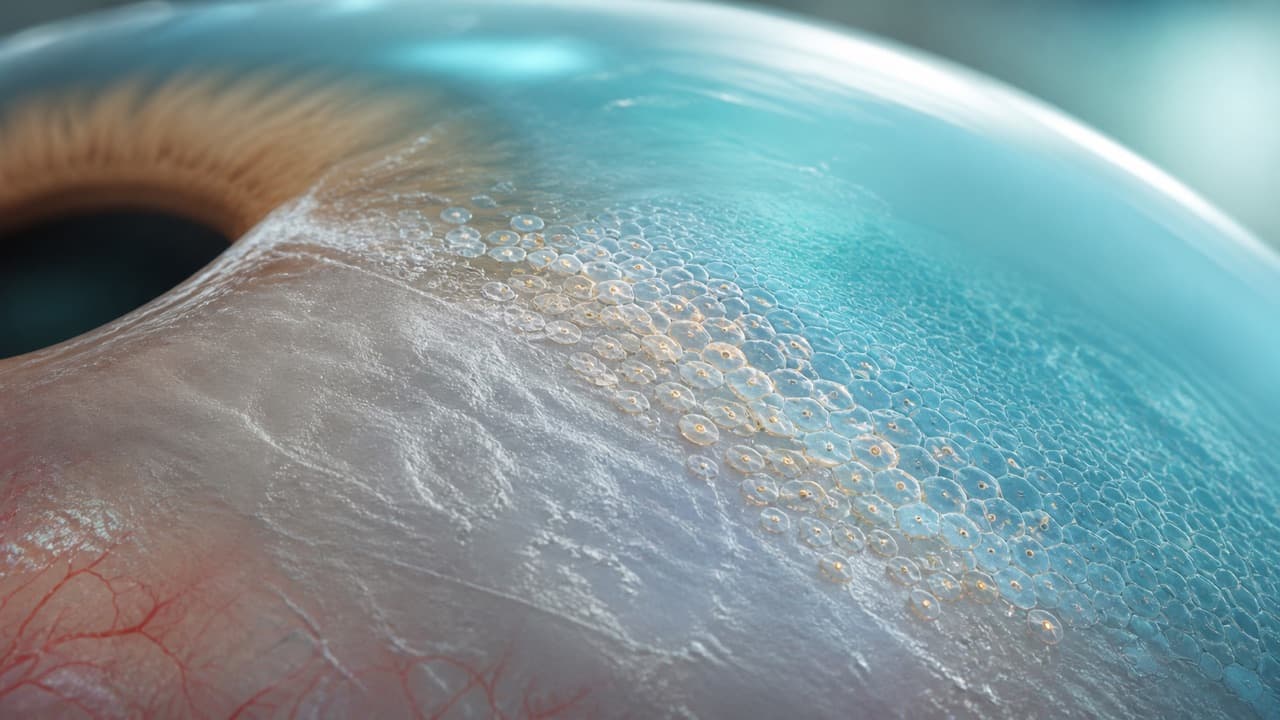
Why the cornea needs limbal stem cells
The cornea is the clear front window of the eye. Stem cells around its edge, called the limbus, continually renew its surface. A severe chemical burn, thermal injury, or other damage can destroy these cells and leave the cornea painful, cloudy, irregular, and vulnerable to repeated breakdown.
In the CALEC approach, clinicians took a small biopsy from a patient's healthy eye, expanded the person's own limbal epithelial cells on a graft in a specialized facility, and transplanted the resulting sheet onto the injured eye.
Because the cells are autologous, they come from the patient rather than a donor. The manufacturing and quality-control process is a major part of the treatment, not simply a stem-cell injection.
What the early clinical trial reported
The published phase 1/2 study followed 14 treated patients for up to 18 months. Investigators reported that the approach was feasible and appeared safe in this small group, with complete or partial restoration of the corneal surface in most evaluated eyes.
Those results are encouraging, but 14 patients are not enough to prove that the treatment will work for every injury or remain effective for many years. Larger studies and longer follow-up are still necessary.
The treatment also does not erase all consequences of a severe burn. Corneal scarring, glaucoma, cataract, retinal damage, or other injuries can continue to limit vision even if the surface becomes healthier.
What this means for Jaipur patients today
This is a research development, not a claim that CALEC is available at Kabra Eye Hospital. Patients with corneal scars, recurrent epithelial problems, suspected limbal stem-cell deficiency, or previous chemical injury need careful diagnosis before discussing transplantation or rehabilitation.
Kabra Eye Hospital's cornea pathway can begin with slit-lamp examination, corneal mapping where appropriate, surface assessment, and referral planning when highly specialized treatment is required.
The immediate public-health message remains simple: chemical eye injuries are emergencies, and rapid irrigation plus urgent medical care can preserve tissue that no future technology can easily replace.
Quick Answers
Did the CALEC trial restore perfect eyesight?
No. The early trial primarily evaluated whether the cell manufacturing and transplant approach was feasible and safe and whether it restored a healthier corneal surface. Some patients may still need further visual rehabilitation.
Is corneal stem-cell treatment routine in Jaipur?
No. CALEC remains a specialized investigational approach from a small clinical study and should not be presented as routine local treatment.
What should someone with a chemical eye injury do?
Immediately rinse the eye with clean running water and seek emergency ophthalmic care. Do not wait for pain or redness to settle and do not apply unprescribed drops.
Read the evidence behind this explainer
These links lead to the regulator, peer-reviewed journal, or research institution used for this article. Kabra Eye Hospital has summarized the findings and limits in patient-friendly language.
CALEC is an investigational, specialized cell-therapy approach. This article reports research and does not claim that the procedure is available at Kabra Eye Hospital.