
CRISPR Inside the Eye: Can Gene Editing Help Inherited Retinal Blindness?
Kabra Eye Hospital's research explainer on EDIT-101, the small early trial that delivered CRISPR gene editing directly into the eye for CEP290-related retinal disease.
Book an Eye Examination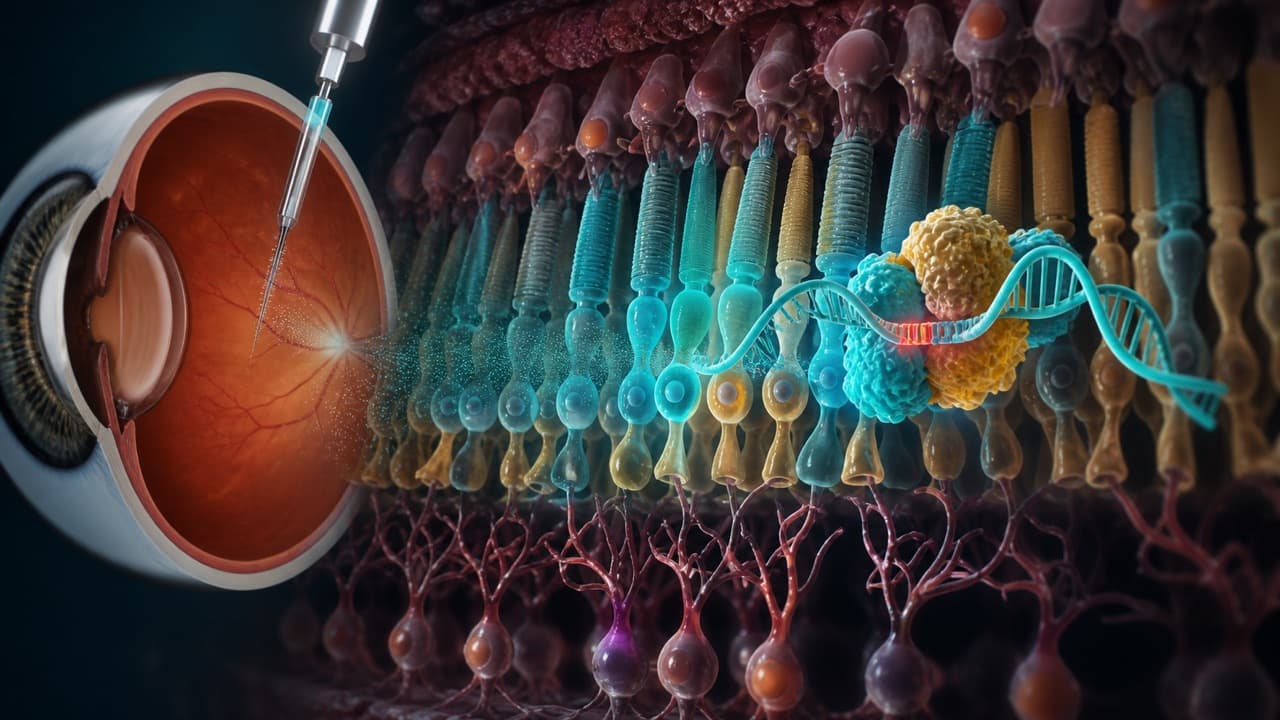
What was edited
EDIT-101 was designed for a specific inherited retinal degeneration caused by a particular CEP290 mutation. The CRISPR-based medicine was delivered beneath the retina in one eye to edit DNA inside retinal cells.
This matters because the treatment was performed directly inside the body rather than editing cells in a laboratory and returning them later. It was also designed for a defined mutation, not every form of retinal blindness.
Inherited retinal diseases can look similar while being caused by different genes. That is why diagnosis and genetic counselling come before any discussion of a gene-specific trial.
What the early study found
The phase 1/2 report included 14 participants. Researchers did not observe treatment- or procedure-related serious adverse events and reported improvements in at least one visual measure for several participants.
The results are a proof-of-concept signal, not evidence that vision can always be restored. The study was small, did not include a conventional control group, and measured several different outcomes.
Long-term monitoring matters because gene editing is intended to create a durable biological change. Researchers must continue studying safety, consistency, dose, and which patients are most likely to benefit.
A responsible local pathway in Jaipur
Kabra Eye Hospital does not present experimental CRISPR treatment as a routine service. The hospital's role is to recognize suspicious retinal patterns, document vision and imaging, counsel families honestly, and refer for genetic evaluation or research centers when appropriate.
Patients with night blindness, narrowing side vision, light sensitivity, unexplained childhood visual loss, or a family history of similar problems should not wait for a future cure before seeking a retina assessment.
Accurate diagnosis today can guide low-vision support, family counselling, safety planning, and eligibility for future trials.
Quick Answers
Has CRISPR cured inherited blindness?
No. The EDIT-101 study was a small early-phase trial that found signals of benefit in some participants. It did not prove a universal cure and further study is required.
Why is gene editing delivered inside the eye?
The treatment was placed beneath the retina so it could reach the target photoreceptor cells. The eye's small, enclosed structure also makes local treatment scientifically attractive.
Can a routine retina scan diagnose the exact gene?
No. Imaging may suggest an inherited retinal pattern, but confirmation usually requires clinical history, examination, and appropriately interpreted genetic testing.
Read the evidence behind this explainer
These links lead to the regulator, peer-reviewed journal, or research institution used for this article. Kabra Eye Hospital has summarized the findings and limits in patient-friendly language.
EDIT-101 remains investigational and mutation-specific. Kabra Eye Hospital does not claim to provide CRISPR eye treatment.