
A Solar-Powered Retina Chip? How PRIMA Helped Some AMD Patients Read Again
A clear explanation of the PRIMA photovoltaic retinal implant study for geographic atrophy, including reading gains, limitations, adverse events, and availability.
Book an Eye Examination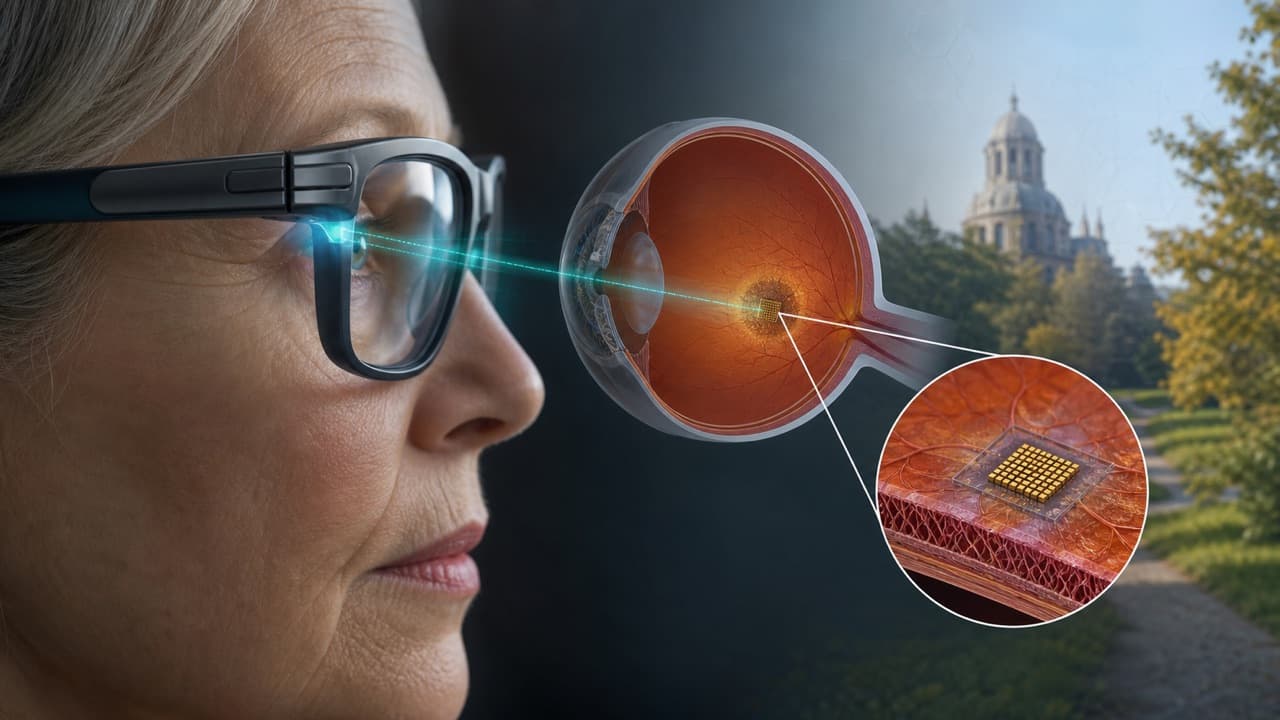
How a photovoltaic retina implant works
PRIMA is a tiny photovoltaic implant placed beneath the retina. Camera-equipped glasses capture a scene and project patterned near-infrared light onto the chip, which converts that light into electrical stimulation.
The goal is to activate surviving retinal pathways after central photoreceptors have been lost to geographic atrophy. Patients learn to combine the prosthetic central signal with their remaining natural peripheral vision.
Calling it a solar-powered eye is catchy, but incomplete. The system requires surgery, external glasses, magnification, training, and careful patient selection.
What the study reported
In the NEJM study, 38 participants received implants and 32 completed the primary 12-month assessment. Twenty-six of those 32 achieved a clinically meaningful improvement in prosthetic visual acuity.
The study also reported serious adverse events; most occurred in the first two months and resolved, while some increases in eye pressure were still being monitored at 12 months.
The findings show that central visual information can be reintroduced in some advanced AMD patients. They do not mean blindness has been cured or that the device is ready for routine use everywhere.
Why early macular assessment still matters
Future implants are exciting, but today's best opportunity is often detecting macular disease before avoidable vision is lost. Distortion, a central blurred patch, difficulty recognizing faces, or straight lines appearing bent deserve prompt retinal examination.
A retina evaluation in Jaipur may include dilated examination, OCT imaging, fundus photography, and treatment planning based on the exact type of macular disease.
Kabra Eye Hospital's research explainers help patients separate laboratory promise, clinical-trial evidence, and treatment that is actually available now.
Quick Answers
Did the PRIMA chip restore normal eyesight?
No. It provided prosthetic central vision used with special glasses. The study reported meaningful letter-score gains in many assessed participants, but this was not normal natural vision.
Is the PRIMA retinal implant available at Kabra Eye Hospital?
No. This article discusses published research; Kabra Eye Hospital does not claim to offer the investigational PRIMA implant.
Who was studied?
The trial enrolled people with geographic atrophy from age-related macular degeneration who had severe central visual loss while retaining peripheral vision.
Read the evidence behind this explainer
These links lead to the regulator, peer-reviewed journal, or research institution used for this article. Kabra Eye Hospital has summarized the findings and limits in patient-friendly language.
PRIMA is an investigational retinal prosthesis. The article reports a clinical study and does not claim local availability.