
How Trans PRK Is Changing Lives Without Side Effects
Discover why patients across Jaipur are choosing no-touch, no-flap Trans PRK for glasses removal — and why it has the safest recovery profile.
Book Screening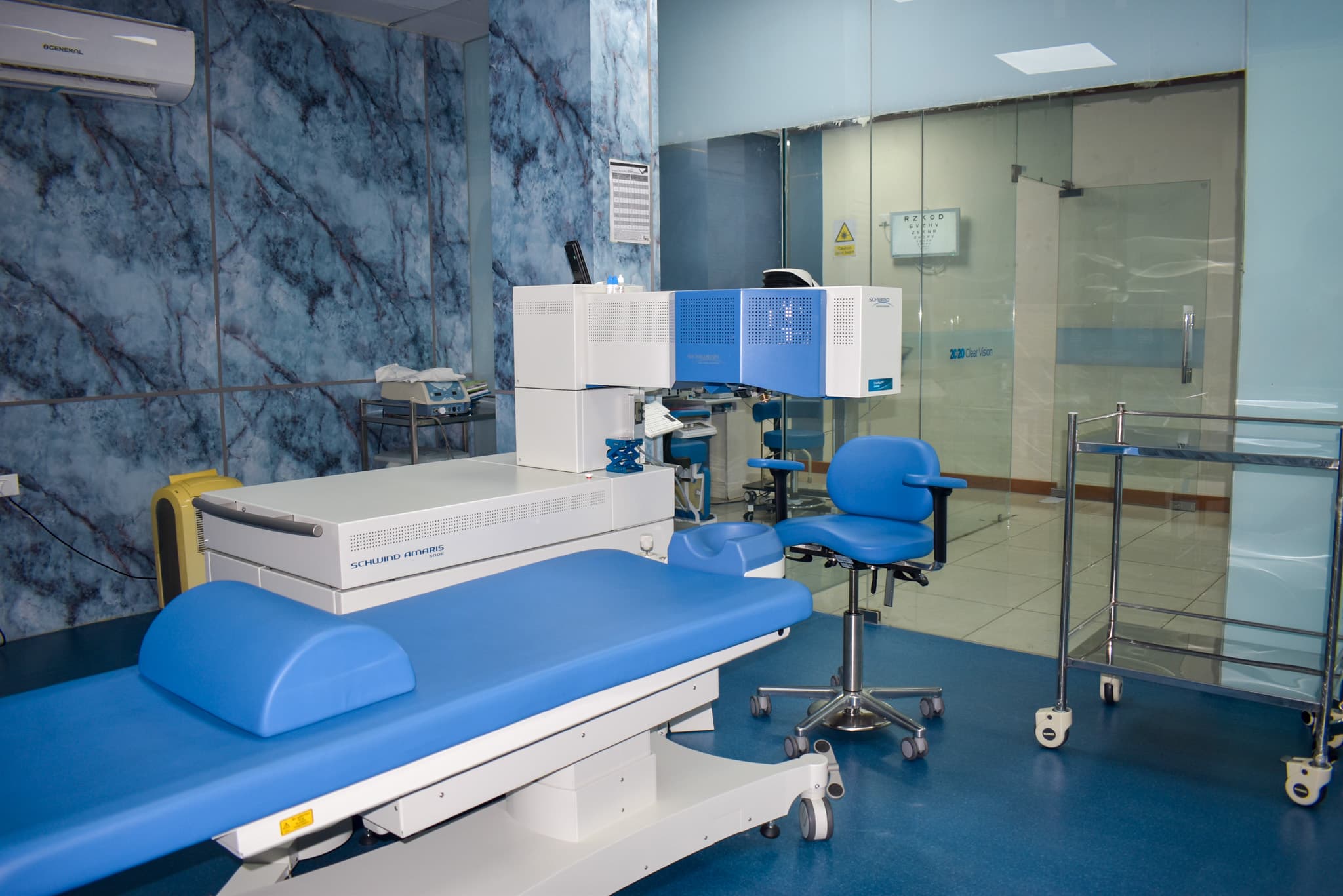
What makes Trans PRK different from LASIK
LASIK creates a corneal flap. That flap is a permanent structural change to your eye. It can dislocate, wrinkle, or cause inflammation years after surgery. Trans PRK eliminates that risk entirely because there is no flap — the laser works directly on the corneal surface.
At Kabra Eye Hospital, Schwind Amaris performs the entire Trans PRK procedure in one seamless laser sequence. No blade touches your eye. No alcohol solution soaks the surface. Just precise laser energy guided by 7-dimensional eye tracking.
Patients who are active, play contact sports, or work in physically demanding jobs often prefer Trans PRK specifically because there is no flap to worry about.
Quick Answers
Does Trans PRK have fewer side effects than LASIK?
Yes. Because Trans PRK is flapless, there is zero risk of flap-related complications like dislocation, wrinkles, or inflammation. This makes recovery safer for active patients.
Who should choose Trans PRK over LASIK?
Patients with thin corneas, active lifestyles, contact sports players, and those concerned about flap-related risks often prefer Trans PRK after suitability screening.
How does Schwind Amaris perform Trans PRK?
Schwind Amaris performs both the surface preparation and vision correction in one seamless laser sequence. No blade, no alcohol solution, no manual instruments touch the eye.