
Can Doctors Transplant a Whole Eye? The Optic-Nerve Problem Explained
Whole-eye transplantation is now a serious research goal, but restoring sight requires regrowing and reconnecting the optic nerve. Kabra Eye Hospital explains the gap.
Book an Eye Examination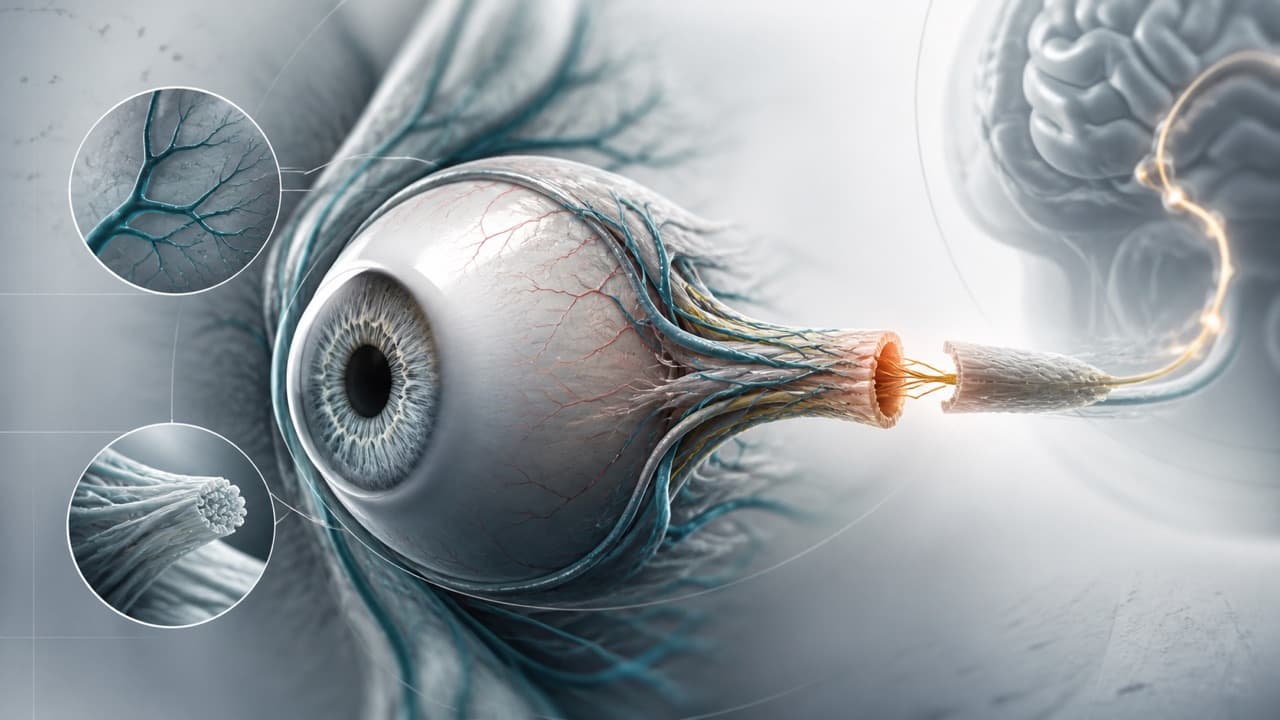
A transplant is more than keeping the eye alive
Surgeons have demonstrated that a transplanted eye can maintain blood flow in an extraordinary combined face-and-eye transplant. That achievement proved important surgical possibilities, but the recipient did not regain sight through the transplanted eye.
Vision depends on the retina converting light into nerve signals and the optic nerve carrying those signals to the brain. A living-looking eye without a functioning optic-nerve connection cannot provide useful vision.
Researchers must solve immune rejection, retinal survival, optic-nerve regeneration, alignment of nerve fibers, and brain adaptation before whole-eye transplantation could become a sight-restoring procedure.
Why major research funding matters
The US Advanced Research Projects Agency for Health announced a program of up to $125 million to pursue functional whole-eye transplantation. The National Eye Institute highlighted optic-nerve regeneration as a central scientific barrier.
This investment does not mean a treatment is ready. It means researchers believe the problem is important enough for coordinated work across surgery, neuroscience, immune biology, rehabilitation, and device engineering.
Claims that a hospital can currently replace a blind eye and restore natural sight should therefore be treated with extreme caution.
What patients can act on now
Many causes of blindness are far more treatable before the optic nerve or retina is irreversibly damaged. Cataract, glaucoma, diabetic retinopathy, retinal tears, infections, and corneal disease all have different time windows for preserving sight.
Patients with sudden vision loss, a curtain in vision, painful redness, eye trauma, or new flashes and floaters need urgent assessment instead of waiting for future transplant science.
Kabra Eye Hospital Jaipur publishes research explainers to make new discoveries understandable while keeping the action point grounded in care that exists today.
Quick Answers
Has a whole-eye transplant restored sight?
No. A whole eye has been transplanted as part of a face transplant, but routine sight-restoring whole-eye transplantation has not been achieved.
Why cannot doctors simply reconnect the optic nerve?
The optic nerve contains more than a million nerve fibers that must survive, regrow, reach the brain, and reconnect in a functionally meaningful pattern. Adult central nervous system tissue has very limited natural regeneration.
Is eye transplantation available in Jaipur?
No. Whole-eye transplantation is a research objective, not routine clinical treatment in Jaipur or elsewhere.
Read the evidence behind this explainer
These links lead to the regulator, peer-reviewed journal, or research institution used for this article. Kabra Eye Hospital has summarized the findings and limits in patient-friendly language.
Sight-restoring whole-eye transplantation is not currently a routine treatment. This is a research explainer, not a treatment offer.